Why Slowing Down Can Feel Unsafe and How It Supports Healing
Somatic Coaching
The idea of slowing down often sounds simple. Take a break. Pause. Do less.
Yet, for many trauma survivors, slowing down is one of the hardest things to do. It can feel unsettling, unfamiliar, and even threatening. This is because slowing down is not simply a behavioral shift. It is a nervous system shift. And that shift asks your body to surrender patterns it once needed in order to feel safe.
When a child grows up in chaos, inconsistency, emotional neglect, or environments where safety was unpredictable, the nervous system adapts. It becomes skilled at noticing everything. It scans for the smallest cues of threat. It stays alert so it can anticipate what might come next.
Hypervigilance becomes a norm, not a crisis response. Busyness becomes a shield, not a preference.
As adults, these early coping strategies can turn into identity statements.
I am someone who gets things done.
I perform under pressure.
I stay busy because it keeps me steady.
I do it all because I always have.
These statements often hide deeper truths:
If I stop, I might fall apart.
If I slow down, I might feel things I am not sure I can hold.
If I rest, people might think less of me.
If I am not productive, am I still valuable?
For many people, productivity became intertwined with worth long before they ever had the language for it. Comments like “If you have time to lean, you have time to clean” or expectations that children perform, behave, achieve, and meet the emotional needs of adults all reinforce the belief that rest is suspicious and output is required.
When rest was criticized or earned rather than modeled and supported, the nervous system learned that slowing down was a risk. Rest became coded as vulnerability. And vulnerability, in unsafe environments, feels dangerous.
This helps explain why slowing down can feel harder than staying busy. Busy feels familiar. Busy feels like control. Busy keeps the deeper grief or loneliness out of focus. Busy is a distraction that looks productive. Slowing down removes the buffer. Slowing down asks your body to sit with what it once had to outrun.
Yet slowing down is not only possible. It is necessary for healing.
When you reduce the pace, your nervous system has a chance to shift from high activation into a more regulated state. Slowing down helps engage the parasympathetic system, the part of your body that supports rest, digestion, emotional tolerance, cognitive clarity, and internal safety.
Slowing down increases your ability to listen to yourself.
It helps you notice fatigue before it becomes exhaustion.
It helps you sense activation before it becomes panic.
It helps you identify boundaries before resentment builds.
It helps you reconnect with the parts of you that once had to stay hidden to survive.
One of the most powerful elements of slowing down is relearning trust. When your nervous system has spent years or decades believing that safety exists in staying alert, it takes time and gentleness to convince your system that rest is allowed. Rest requires trusting that you can return to activation if needed. It requires trusting that you will know what to do. It requires trusting that stillness does not mean danger anymore.
This is why slowing down is a practice rather than a switch. It is not accomplished all at once. It is built through small moments where you choose to pause instead of push. It is built through internal check-ins that ask, “What do I need right now?” rather than “What do others expect from me?” It is built through noticing your body’s cues: tension in your jaw, tightness in your chest, fatigue behind your eyes, heaviness in your limbs. These cues are not inconveniences. They are invitations.
When you begin slowing down, you may also notice emotions surfacing that were once pushed aside by constant movement. If slowing down brings old feelings into focus, it usually signals that your body feels safe enough to let you notice what was once too overwhelming to hold. Stillness often reveals what activity once protected you from. This is part of why the practice can feel so vulnerable. Yet this vulnerability offers important information about what needs tending within you. Slowing down is not only a physiological shift. It is an emotional and relational one, inviting you to reconnect with the parts of you that were forced to grow quiet in order to survive. Healing requires this kind of attunement, and it unfolds at a pace that honors your capacity rather than your conditioning.
Slowing down is not the absence of movement. It is the presence of self.
It is the process of letting your body experience safety in real time. It is the act of honoring your capacity rather than your conditioning. It is the choice to step out of survival so you can live from a place that allows for rest, softness, clarity, and connection.
Part of healing is recognizing that you do not need to earn your rest. You do not need to justify your limits. You do not need to perform your worth. You simply need to honor the truth of what your body is asking from you.
Dear one, slowing down is not failure. It is wisdom. It is your nervous system leading you back to yourself.
Thank you for letting me see you,

December 17, 2025
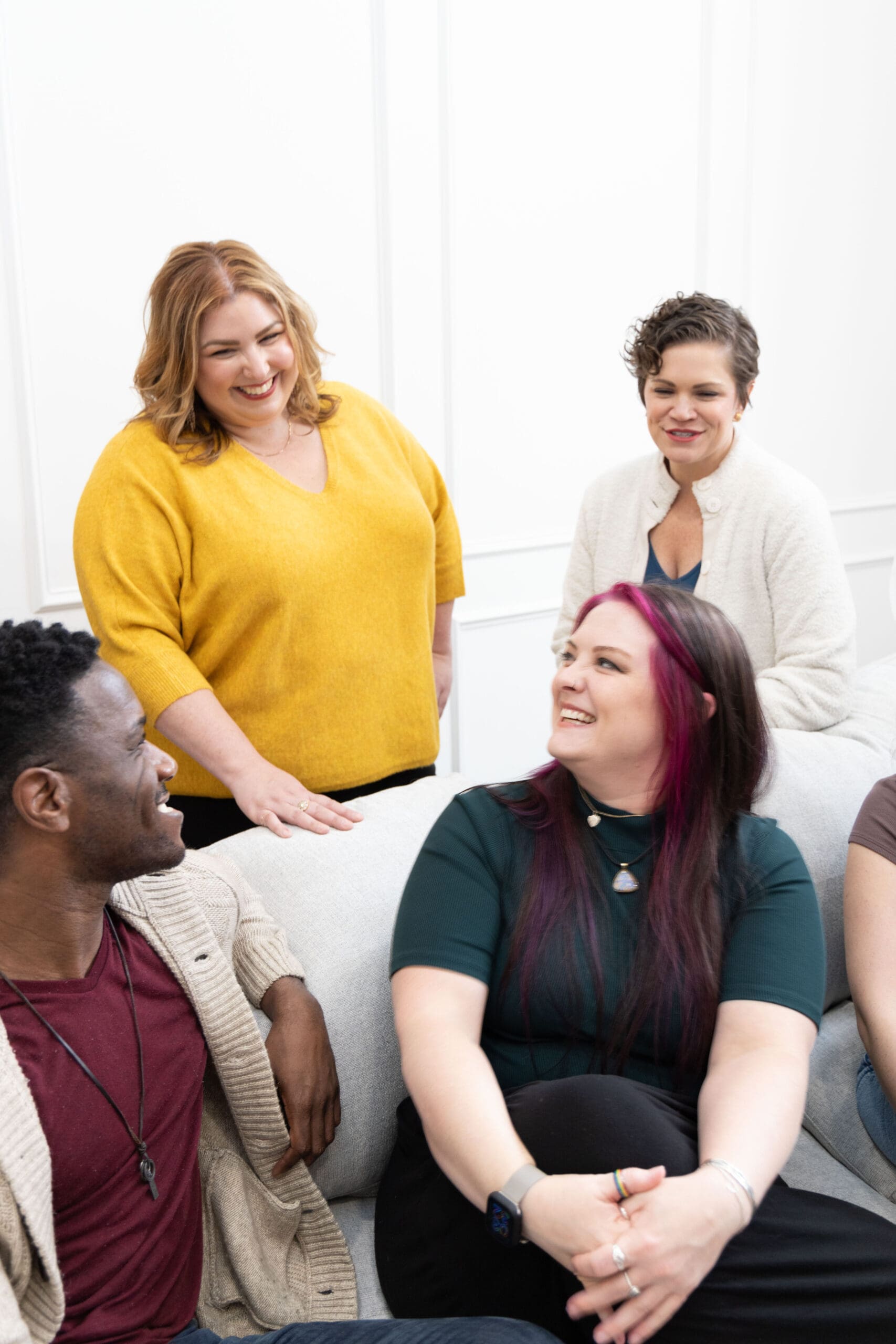
At The Empowered Therapist, Danica firmly believes that everyone is their own expert. Her mission is to guide individuals to their own insights, ensuring they know they're not alone on their journey. Danica understands that healing unfolds in small yet significant doses, fostered through normalization, validation, education, and gentleness. To support your healing journey, Danica and her team offer a broad spectrum of services, including personalized therapy, professional training, immersive events, empowering coaching sessions and so much more. Danica's goal is to create a supportive environment where change is not just possible but inevitable, helping individuals embrace their fullest healing potential and embark on a path of deep self-discovery and lasting change.
last updated 5/25/26
Join me on Instagram for daily reflections, reminders & insights on your healing journey.
Follow @theempoweredtherapist